

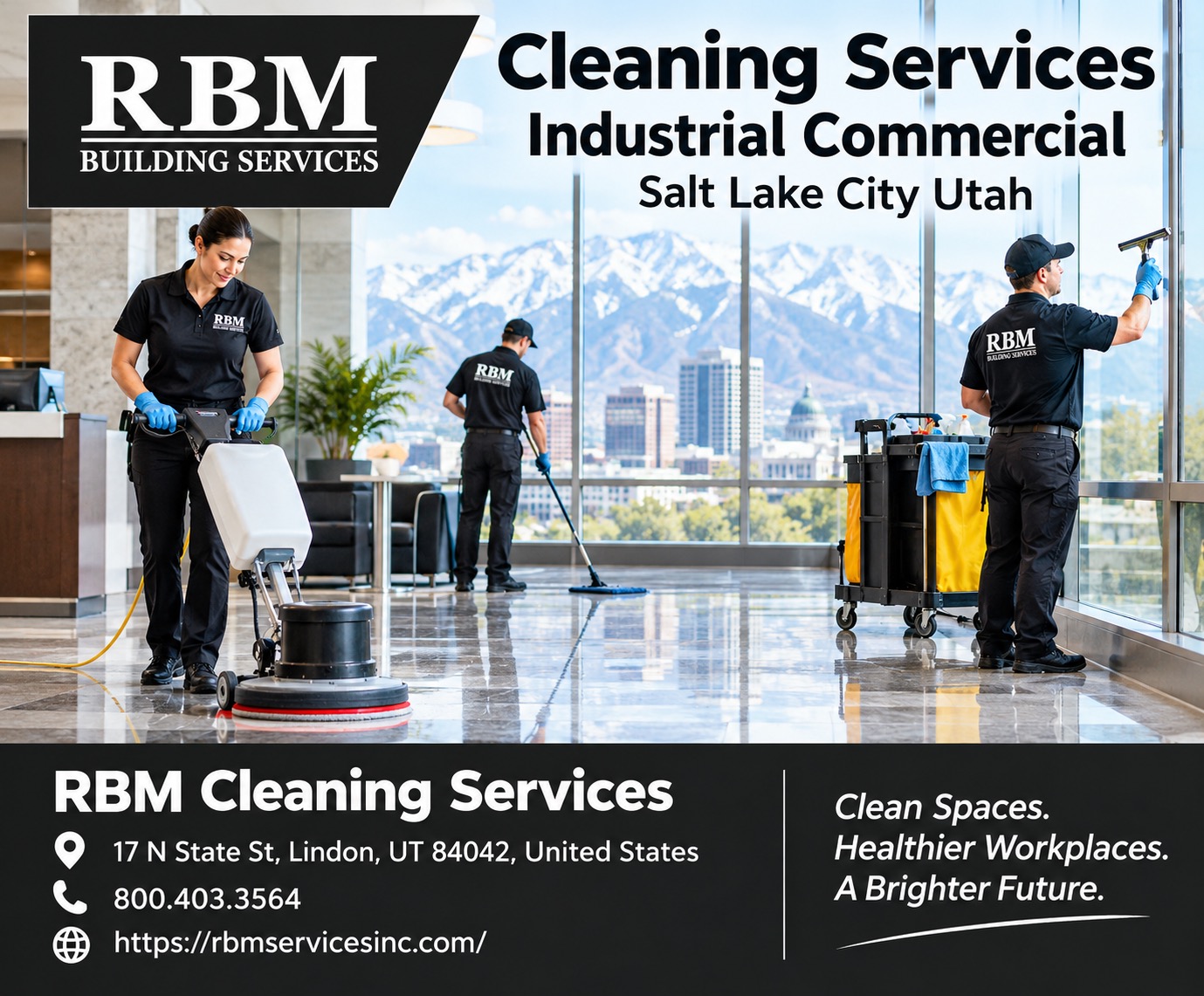
Cleaning Services Industrial Commercial Salt Lake City Utah: Professional Solutions by RBM Cleaning Services
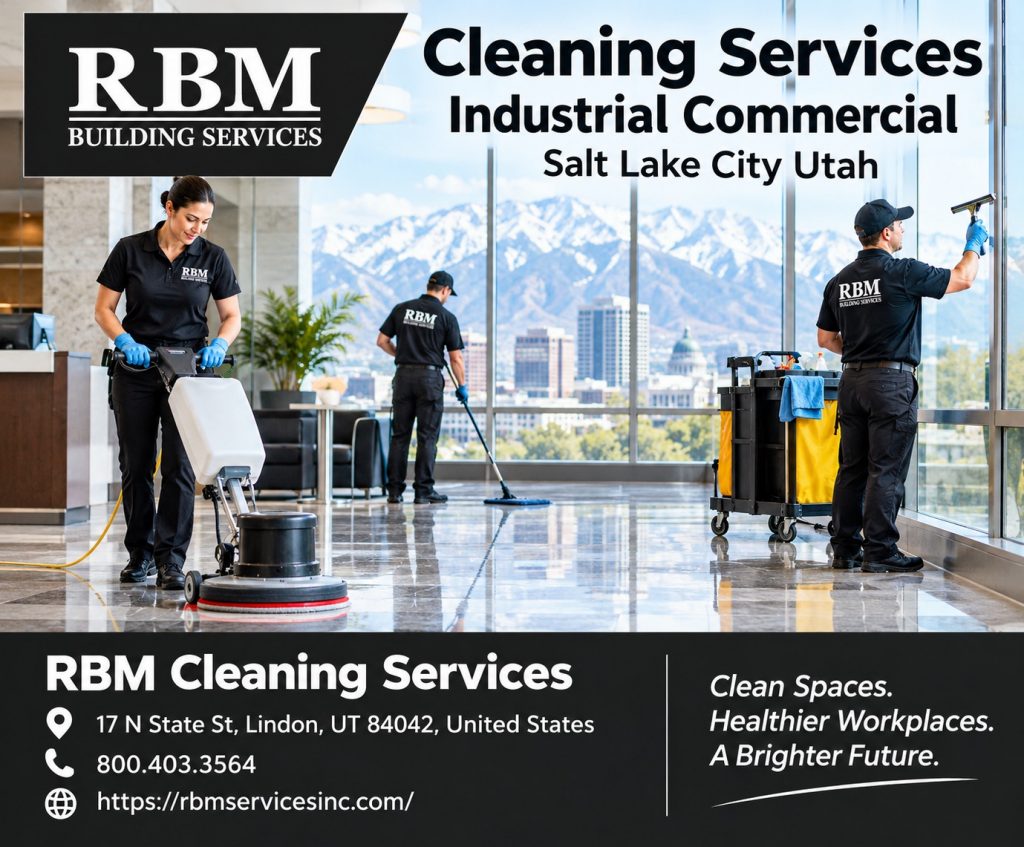
Introduction to Industrial and Commercial Cleaning in Salt Lake City, Utah
Maintaining a clean, safe, and professional facility is essential for businesses of every size. From corporate offices and retail stores to warehouses, manufacturing plants, medical facilities, and large commercial buildings, cleanliness directly influences employee comfort, customer impressions, workplace safety, and the overall condition of a property.
For organizations searching for Cleaning Services Industrial Commercial Salt Lake City Utah, finding a dependable cleaning partner is an important step toward maintaining a productive and welcoming business environment. Professional cleaning services help organizations manage daily cleaning responsibilities, maintain sanitary conditions, protect flooring and equipment, and keep their facilities ready for employees, customers, tenants, and visitors.
Salt Lake City is an important business and industrial center in Utah, with commercial offices, distribution facilities, healthcare buildings, educational institutions, retail establishments, and manufacturing operations. Each facility has different cleaning requirements. A professional office may need consistent janitorial service, while a warehouse may require specialized floor cleaning, dust control, and attention to heavily used operational areas.
RBM Building Services, also known as RBM Cleaning Services in the contact information provided below, offers commercial cleaning and building maintenance solutions for businesses seeking professional facility care. Its published services include janitorial cleaning, floor care, window washing, pressure washing, green cleaning, post-event cleanup, and other property maintenance services.
Businesses can explore the company’s service offerings at https://rbmservicesinc.com/.
This comprehensive guide explains the importance of industrial and commercial cleaning, the services businesses may need, how to maintain different facility types, and why contacting RBM Building Services can be a practical step toward improving your workplace.
What Are Industrial and Commercial Cleaning Services?
Industrial and commercial cleaning services involve the professional cleaning and maintenance of business facilities. Although the terms are sometimes used interchangeably, industrial cleaning and commercial cleaning can involve different procedures, equipment, safety considerations, and service schedules.
Commercial Cleaning Services
Commercial cleaning generally focuses on offices, retail spaces, professional buildings, educational facilities, common areas, and other business environments.
Typical commercial cleaning tasks include:
- Vacuuming carpets and cleaning hard floors.
- Dusting furniture, counters, and accessible surfaces.
- Cleaning and disinfecting appropriate high-touch surfaces.
- Cleaning restrooms and replenishing agreed-upon supplies.
- Maintaining breakrooms and employee kitchens.
- Emptying waste containers and managing recycling.
- Cleaning glass doors, interior windows, and entrances.
- Maintaining lobbies, hallways, and shared spaces.
Regular commercial cleaning helps businesses maintain a professional appearance while making cleanliness an ongoing part of their operations.
Industrial Cleaning Services
Industrial cleaning often involves larger facilities and environments where dust, debris, machinery, production activity, or heavy foot and vehicle traffic create additional cleaning challenges.
Depending on the facility and service agreement, industrial cleaning may involve:
- Cleaning and scrubbing warehouse floors.
- Removing ordinary accumulated dust and debris.
- Cleaning designated production support areas.
- Maintaining loading docks and circulation areas.
- Removing waste from approved locations.
- Cleaning accessible structural surfaces.
- Pressure washing suitable exterior surfaces.
- Supporting scheduled facility maintenance.
Industrial environments can present hazards that require specialized training, equipment, protective measures, or additional contractors. Cleaning around energized machinery, hazardous chemicals, confined spaces, or specialized production equipment should only be performed under appropriate safety procedures by qualified personnel.
For businesses in Salt Lake City, selecting a cleaning provider whose capabilities match the facility’s requirements is essential.
If you need related articles, see the following:
Cleaning Services For Commercial Salina Utah
Cleaning Services For Commercial Erda Utah
Cleaning Services For Commercial Hildale Utah
Why Professional Cleaning Matters in Salt Lake City, Utah
Salt Lake City’s climate, business activity, and seasonal weather can create ongoing cleaning challenges. Dust, changing temperatures, winter precipitation, and road salt can all contribute to the accumulation of dirt inside buildings.
Businesses also experience everyday wear from employees, customers, delivery personnel, contractors, and visitors.
Without a consistent cleaning plan, dirt can accumulate on floors, fingerprints can become visible on glass, restrooms can deteriorate, and dust can collect on furniture and other surfaces.
Professional cleaning provides several important benefits.
1. A More Professional Business Image
The condition of a facility influences how people perceive a business. Clean entrances, organized common areas, well-maintained floors, and sanitary restrooms communicate attention to detail.
Customers visiting a retail store or professional office are more likely to feel comfortable when the environment appears clean and orderly.
Likewise, a well-maintained industrial facility can demonstrate that management takes workplace organization and property care seriously.
RBM Building Services can be contacted to discuss cleaning arrangements suited to the appearance and operational needs of your facility.
2. A Healthier Workplace Environment
Dust, soil, and contamination can accumulate on frequently touched surfaces and in shared spaces. Regular cleaning, combined with appropriate disinfection where needed, helps maintain more hygienic working conditions.
High-priority areas often include door handles, shared counters, breakroom tables, restroom fixtures, and commonly used equipment surfaces.
The correct cleaning method depends on the surface, the type of contamination, and the facility’s requirements. Disinfectants should be used according to their labels and applicable safety instructions.
A consistent cleaning program supports workplace hygiene, although it cannot eliminate every source of illness or guarantee that infections will not spread.
3. Improved Employee Comfort and Productivity
Employees spend a substantial portion of their day at work. A clean and organized environment can make that time more comfortable and help staff focus on their responsibilities.
Overflowing waste containers, dirty breakrooms, dusty work areas, and poorly maintained restrooms can create unnecessary frustration.
Outsourcing routine cleaning tasks can also allow employees to concentrate on their primary responsibilities rather than taking on additional facility maintenance duties.
4. Protection of Floors, Fixtures, and Building Materials
Commercial flooring, carpets, windows, fixtures, and other surfaces represent a significant investment.
Accumulated grit can contribute to floor wear, while neglected carpets may retain dirt and stains. Improper cleaning chemicals can also damage certain finishes.
Routine maintenance and periodic deep cleaning help preserve appropriate surfaces and may reduce the need for premature replacement.
Professional cleaners can recommend cleaning methods suited to the flooring and materials present in a facility.
5. Better Facility Organization and Maintenance
Cleaning professionals may notice developing maintenance concerns during routine service, such as persistent spills, damaged floor finishes, leaking fixtures, or recurring dirt accumulation.
A clear reporting process allows facility managers to address these concerns before they become more disruptive.
Cleaning is not a substitute for inspections or repairs, but it can support a more organized approach to building maintenance.
Industrial Cleaning Services for Salt Lake City Businesses
Industrial properties often operate for extended hours and may experience heavy traffic, material movement, and continuous equipment use. Their cleaning programs should reflect the activities taking place in each area.
Warehouse and Distribution Center Cleaning
Warehouses and distribution facilities can accumulate dust, packaging debris, tracked-in soil, and residue from routine operations.
Cleaning priorities may include:
- Sweeping and scrubbing suitable floor surfaces.
- Maintaining pedestrian walkways.
- Cleaning approved breakrooms and restrooms.
- Removing ordinary debris from designated areas.
- Maintaining entrances and loading-area floors.
- Cleaning accessible office and administrative areas.
- Addressing spills through established safety procedures.
A warehouse cleaning schedule should account for forklift routes, loading operations, pedestrian movement, and restricted areas.
Cleaning should be coordinated with facility management so that workers and equipment can operate safely. Marked walkways and emergency exits must remain unobstructed.
Manufacturing Facility Cleaning
Manufacturing facilities require cleaning procedures that reflect the materials handled, production methods, and safety requirements of the operation.
Routine tasks may include maintaining office spaces, employee restrooms, shared breakrooms, and designated nonproduction floors.
More specialized work may involve equipment exteriors, production support areas, or industrial floor surfaces. Such work should be included only when the cleaning provider is qualified and the necessary procedures have been established.
Businesses should identify areas requiring special authorization, equipment shutdowns, protective equipment, or controlled access before service begins.
Industrial Floor Cleaning
Floors in industrial environments may be exposed to dust, tracked-in soil, packaging fragments, and other ordinary debris.
Appropriate floor maintenance can improve appearance and help manage slip and trip risks associated with accumulated dirt or residue.
Cleaning methods may include sweeping, damp mopping, mechanical scrubbing, or other surface-appropriate techniques.
Oil, chemical spills, and unknown substances require a different response from routine dirt. Employees should follow the facility’s spill-response procedures and avoid attempting cleanup beyond their training or authorization.
Industrial Restroom and Breakroom Cleaning
Industrial employees need clean restrooms and suitable places to take breaks.
These shared areas should receive consistent attention, including cleaning fixtures, disinfecting appropriate surfaces, removing waste, cleaning floors, and replenishing agreed-upon consumables.
Because these spaces may experience concentrated use during shift changes, businesses should consider cleaning frequency carefully.
High-Dusting and Hard-to-Reach Areas
Industrial and commercial facilities may have elevated surfaces where dust collects over time.
High-dusting projects can involve structural ledges, accessible overhead surfaces, and other approved locations.
These tasks require suitable access equipment and safe work procedures. Work at height should be performed only by appropriately trained personnel using equipment designed for the task.
Facility managers should identify sensitive machinery, electrical equipment, and production areas before authorizing overhead cleaning.
Commercial Cleaning Services for Salt Lake City Businesses
Commercial buildings have their own maintenance requirements. A consistent cleaning plan can help keep public areas, workspaces, and shared facilities presentable.
Office Cleaning
Office cleaning is important for businesses that welcome clients, conduct meetings, or employ staff throughout the week.
Services may include:
- Dusting desks and accessible furniture.
- Vacuuming carpets.
- Cleaning hard floors.
- Wiping approved shared surfaces.
- Cleaning interior glass and entry doors.
- Emptying trash and recycling containers.
- Maintaining restrooms and breakrooms.
- Cleaning conference rooms and common areas.
The schedule can be designed around the facility’s occupancy, business hours, and priorities.
After-hours cleaning may be appropriate for offices that need to minimize disruption during the workday. Businesses should establish access rules, alarm procedures, and instructions for protecting confidential documents and equipment.
Retail Store Cleaning
Retail establishments depend on an attractive environment to welcome shoppers and maintain customer confidence.
A retail cleaning program may cover entrances, display areas, sales floors, fitting rooms, employee spaces, restrooms, and customer service counters.
Floor maintenance is particularly important because dirt and moisture can be tracked inside throughout the day.
Cleaning schedules should reflect customer traffic and the need to keep aisles, emergency exits, and checkout areas clear.
Medical and Dental Office Cleaning
Healthcare settings require careful attention to hygiene, appropriate disinfectant use, and infection-prevention procedures.
The necessary protocols vary according to the facility, the activities performed, and the applicable requirements.
Before engaging a cleaning provider, healthcare administrators should confirm that the provider can meet the facility’s cleaning specifications, confidentiality expectations, and any applicable training or regulatory requirements.
Cleaning tasks may include maintaining administrative areas, restrooms, waiting rooms, and other approved spaces. Clinical treatment areas may require additional protocols and specifically trained personnel.
Schools and Educational Facilities
Schools, training centers, and educational buildings experience regular use of classrooms, hallways, restrooms, cafeterias, and shared equipment.
Cleaning programs may include surface cleaning, floor maintenance, waste removal, restroom sanitation, and appropriate disinfection of frequently touched surfaces.
Schedules should account for school hours, special events, school holidays, and areas that need additional attention after heavy use.
Apartment Buildings and Shared Commercial Properties
Property managers must maintain common areas that serve residents, tenants, employees, and visitors.
These areas may include lobbies, corridors, elevators, shared restrooms, meeting rooms, and other communal spaces.
Consistent cleaning supports tenant satisfaction and helps preserve the building’s overall presentation.
The service agreement should clearly distinguish routine cleaning from specialized work such as carpet extraction, window washing, floor refinishing, or post-construction cleanup.
Specialized Cleaning and Building Maintenance Services
Industrial and commercial facilities may require more than recurring janitorial service. Periodic projects can address accumulated wear, seasonal maintenance, and specific property needs.
Commercial Floor Care
Commercial floors require cleaning methods appropriate to their materials and finish.
Routine maintenance may include sweeping, mopping, vacuuming, and scheduled machine scrubbing.
Depending on the flooring, specialized services may include stripping and recoating, polishing, or other finish-restoration procedures.
Regular floor care helps preserve appearance and can support safe walking surfaces when combined with proper spill management and maintenance.
Carpet Cleaning
Commercial carpets collect soil, dust, and stains from daily use. Regular vacuuming removes loose debris, while periodic deep cleaning can address embedded soil.
The correct treatment depends on the carpet fibers, backing, stains, and manufacturer’s recommendations.
Businesses may schedule carpet cleaning during quieter periods to allow sufficient drying time and reduce disruption.
Window Washing
Clean windows and glass entrances help improve the appearance of offices, retail locations, and commercial buildings.
Window washing may include accessible interior glass, exterior windows, entrance doors, and other approved glass surfaces.
High-rise and difficult-to-access windows require appropriate equipment and trained personnel. Before arranging service, confirm the scope, access requirements, and safety arrangements.
Pressure Washing
Exterior walkways, concrete areas, parking surfaces, and building exteriors may accumulate dirt and grime.
Pressure washing can help restore the appearance of suitable surfaces when performed with the correct equipment, pressure, and cleaning agents.
Not every surface is appropriate for high-pressure cleaning. The method should be selected carefully to avoid damaging coatings, seals, masonry, or nearby landscaping.
Green Cleaning
Green cleaning emphasizes the thoughtful selection and use of cleaning products and methods, with attention to environmental considerations.
Depending on the service plan, this may involve suitable lower-impact products, efficient equipment, controlled chemical use, and waste-reduction practices.
Businesses interested in green cleaning should ask which products and methods are available and whether they meet the facility’s hygiene and performance requirements.
Post-Construction and Post-Renovation Cleaning
Construction and renovation can leave behind fine dust, packaging, adhesive residue, and other debris.
Post-construction cleaning may involve several stages, including removal of ordinary construction debris, detailed surface cleaning, floor care, and preparation for occupancy.
The scope should be agreed upon with the contractor or property manager. Hazardous construction materials and specialized contaminants require qualified handling and should not be treated as routine janitorial waste.
Post-Event Cleanup
Conferences, corporate gatherings, public events, and business functions can create additional cleaning needs.
Post-event service may include waste collection, restroom cleaning, floor care, and restoration of shared spaces to their normal condition.
Planning in advance allows the cleaning team to understand the venue layout, access arrangements, cleanup deadlines, and waste-disposal requirements.
How Often Should a Commercial or Industrial Facility Be Cleaned?
The appropriate cleaning frequency depends on the facility’s size, occupancy, activities, sanitation requirements, and available budget.
A typical planning framework may look like this:
Daily cleaning: Restrooms, busy entrances, waste collection, breakrooms, frequently used common areas, and other high-priority spaces.
Several times per week: Routine cleaning for lower-traffic offices or selected areas, depending on occupancy and usage.
Weekly cleaning: More detailed dusting, periodic glass cleaning, and tasks that do not require daily attention.
Monthly or periodic cleaning: Selected deep-cleaning projects, detailed floor maintenance, and other tasks scheduled according to wear and manufacturer recommendations.
Seasonal or project-based cleaning: Exterior pressure washing, intensive carpet cleaning, post-event cleanup, and other specialized work.
Industrial facilities may need different schedules for production areas, warehouses, offices, and employee amenities.
A professional cleaning assessment can help establish a schedule that matches the facility’s actual requirements rather than applying the same checklist to every building.
Creating an Effective Industrial and Commercial Cleaning Plan
A strong cleaning program begins with understanding how a facility operates.
Step 1: Assess the Building
Identify the building’s square footage, floor types, traffic patterns, work schedules, sensitive areas, and current maintenance challenges.
A walkthrough can reveal areas that require more frequent attention or specialized treatment.
Step 2: Establish Priorities
Determine which tasks are essential every day and which can be scheduled periodically.
For example, restroom sanitation and waste removal may be daily priorities, while certain deep-cleaning tasks may be needed only monthly or seasonally.
Step 3: Define the Scope of Work
A written scope should describe which areas will be cleaned, which tasks are included, how often service will occur, and which supplies are covered.
It should also identify exclusions, special requirements, and the process for requesting additional work.
Step 4: Coordinate Cleaning With Business Operations
Cleaning should be scheduled to minimize disruption and maintain access to essential work areas.
Businesses may prefer evening, overnight, weekend, or selected daytime cleaning, depending on the facility and service availability.
Industrial operations may require additional coordination with safety personnel and production supervisors.
Step 5: Establish Quality Checks
Facility managers should agree on how cleaning quality will be reviewed and how concerns will be reported.
Written checklists, periodic walkthroughs, and clear communication help both parties understand expectations.
Step 6: Review the Plan Regularly
Business needs change. A facility may expand, hire additional staff, introduce new equipment, or increase production.
Periodic reviews help ensure that the cleaning schedule and scope remain appropriate.
Why You Should Call RMB Building Services for Industrial and Commercial Cleaning
Selecting a cleaning provider is an important decision. Businesses need a company that can understand their facility, establish a suitable service plan, and communicate clearly about expectations.
RBM Building Services publishes a range of commercial cleaning and building maintenance offerings and serves Salt Lake County and other areas of Northern Utah. Its listed services include full-service janitorial cleaning, floor care, window washing, pressure washing, green cleaning, post-event cleanup, carpet cleaning, and building maintenance.
Here are several reasons to consider contacting the company about your facility.
1. A Range of Commercial Cleaning Services
Businesses often need multiple types of cleaning over the course of a year.
A company may require regular office cleaning, periodic carpet care, window washing, and occasional pressure washing.
RBM Building Services lists several of these services within its commercial cleaning and building maintenance offerings. This provides an opportunity to discuss whether a coordinated service plan is suitable for your facility.
The precise scope, availability, and frequency of each service should be confirmed directly with the company.
2. Cleaning Plans Based on Facility Requirements
A small professional office does not have the same needs as a distribution center, medical office, retail store, or large industrial building.
RBM Building Services invites businesses to discuss their facility needs and request a service proposal.
During that conversation, explain your building’s size, operating hours, traffic levels, flooring materials, high-priority areas, and any specialized requirements.
This information can help the company determine an appropriate scope of work and identify which services are a good fit.
3. Support for Ongoing Building Maintenance
Cleaning and property maintenance often overlap. Well-maintained floors, clean windows, attractive entrances, and organized common areas contribute to a facility’s overall condition.
RBM Building Services publishes both cleaning and broader building maintenance services, giving businesses an opportunity to discuss related property-care requirements.
Ask which tasks can be included in a single proposal and which may need to be scheduled separately.
4. Attention to Scheduling and Business Operations
Cleaning arrangements should work around the facility rather than interfere with its operations.
When contacting RBM Building Services, discuss whether the preferred service times are available and how the cleaning plan would accommodate employee shifts, deliveries, customer traffic, or sensitive areas.
Clear scheduling arrangements help reduce confusion and allow the cleaning scope to be implemented more effectively.
5. A Structured Consultation and Proposal Process
RBM Building Services describes a process that begins with an inquiry and discussion of the building’s needs, followed by a proposal based on the required workload.
Its published consultation process also describes transition planning before service begins.
For facility managers, this creates an opportunity to clarify responsibilities, service frequency, access requirements, and performance expectations before committing to an arrangement.
6. An Opportunity to Request a Tailored Estimate
Cleaning costs vary according to building size, cleaning frequency, floor type, staffing needs, specialized equipment, and the amount of work required.
Instead of relying on a generic price, request an estimate based on your actual facility.
Compare the proposed scope, schedule, exclusions, and service arrangements to determine whether the proposal meets your operational needs.
7. Experience in Building and Property Care
RBM Building Services states on its website that it has been providing building and property services since 1974.
Its published service range extends beyond basic janitorial cleaning into selected floor-care and property-maintenance activities.
Businesses can use an initial consultation to discuss the company’s experience with comparable facilities and confirm that its capabilities align with the project’s requirements.
Ultimately, the right provider should be able to explain the work clearly, answer relevant questions, and agree on a practical plan for maintaining the building.
How Much Do Industrial and Commercial Cleaning Services Cost in Salt Lake City?
The cost of industrial and commercial cleaning depends on several variables, so a site-specific estimate is generally the most useful way to establish a budget.
Factors affecting the price include:
- Total building square footage.
- Number of rooms and restrooms.
- Frequency of cleaning visits.
- Level of foot traffic and soil accumulation.
- Type and condition of flooring.
- Required cleaning equipment and products.
- Specialized safety or access requirements.
- Carpet, window, and floor-care needs.
- Waste handling and supply-restocking responsibilities.
- Whether the service is recurring or a one-time project.
For example, a small office requiring routine janitorial cleaning will typically have a different scope from a warehouse that needs large-floor-area scrubbing and specialized access arrangements.
When requesting an estimate from RBM Building Services, provide accurate details about the property and ask for a written description of the included tasks. This makes it easier to evaluate the proposed service and plan future expenses.
Choosing the Right Industrial and Commercial Cleaning Company
Before signing a service agreement, businesses should evaluate whether a cleaning company is suitable for the specific facility.
Consider asking the following questions:
- What types of commercial and industrial facilities have you serviced?
- Which cleaning tasks are included in the proposal?
- What cleaning frequency do you recommend?
- Can service be scheduled outside normal operating hours?
- What procedures apply to restricted or sensitive areas?
- Which cleaning products and equipment will be used?
- How will service quality be checked?
- Who should be contacted if a task is missed?
- Are specialty services such as floor refinishing or pressure washing included?
- What are the agreement terms, exclusions, and additional charges?
For industrial environments, also confirm that the provider can meet the facility’s safety requirements and that any specialized cleaning tasks will be performed by appropriately qualified personnel.
These questions help establish realistic expectations and support a productive working relationship.
Frequently Asked Questions About Industrial and Commercial Cleaning in Salt Lake City, Utah
What is the difference between industrial cleaning and commercial cleaning?
Commercial cleaning generally focuses on offices, retail spaces, shared facilities, and other business environments. Industrial cleaning may involve warehouses, manufacturing areas, and operational spaces with additional dust, debris, equipment, and safety considerations.
Some facilities need both types of service.
Does RBM Building Services offer regular janitorial cleaning?
RBM Building Services lists full-service janitorial cleaning among its commercial offerings. Contact the company to confirm availability, the service area, the appropriate schedule, and the tasks that can be included in a proposal.
Can industrial cleaning be scheduled around production hours?
Scheduling depends on the facility and the agreed service arrangement. Businesses should discuss operating hours, access restrictions, equipment, and safety procedures with the cleaning provider before service begins.
How can commercial cleaning improve workplace safety?
Regular cleaning can help manage accumulated dirt, debris, and certain slip hazards. Appropriate sanitation and organized waste removal can also contribute to a better-maintained workplace. Cleaning must be combined with proper spill response, equipment safeguards, and broader workplace safety procedures.
Are specialized floor-care services necessary?
That depends on the flooring material, traffic level, finish, and condition of the surface. Routine sweeping and mopping may be sufficient for some floors, while others benefit from periodic machine scrubbing, deep cleaning, or finish maintenance.
How can a business request a cleaning estimate?
Businesses can visit https://rbmservicesinc.com/ or contact RBM Building Services by phone. Be prepared to describe the building size, type of facility, required cleaning frequency, and any specialized tasks.
Contact RBM Cleaning Services for Industrial and Commercial Cleaning
A clean business facility supports a professional image, more comfortable working conditions, and better ongoing property care. Whether you manage an office, warehouse, retail location, industrial facility, or multi-tenant building, a carefully planned cleaning program can help keep the property presentable and functional.
RBM Building Services offers a range of commercial cleaning and building maintenance services that businesses can explore when evaluating their facility-care needs.
Contact the company to discuss your requirements, ask about available services, and request an estimate based on your property’s size and operating schedule.
RBM Cleaning Services
Address: 17 N State St, Lindon, UT 84042, United States
Phone: 800.403.3564
Website: https://rbmservicesinc.com/
Call 800.403.3564 or visit https://rbmservicesinc.com/ to discuss your industrial or commercial cleaning needs.
Conclusion
Finding suitable Cleaning Services Industrial Commercial Salt Lake City Utah begins with understanding the demands of your building and selecting a cleaning program that addresses those needs.
From routine janitorial service and restroom sanitation to warehouse floor cleaning, carpet care, window washing, and pressure washing, professional facility cleaning helps businesses maintain a more organized, welcoming, and well-cared-for environment.
Industrial facilities may require additional coordination, equipment, and safety procedures, while offices and retail spaces often prioritize appearance, hygiene, and minimal disruption to daily operations. The most effective cleaning program reflects these differences and adapts as the business changes.
RBM Building Services provides a range of commercial cleaning and building maintenance offerings that businesses can discuss with the company. By requesting a consultation, clarifying the scope of work, and establishing clear expectations, you can make a more informed decision about your facility’s ongoing cleaning needs.
For businesses in Salt Lake City, Utah, seeking professional cleaning support, contact RBM Cleaning Services at 800.403.3564 or visit https://rbmservicesinc.com/ to start the conversation about maintaining a cleaner, more professional workplace.

Comments are closed.