

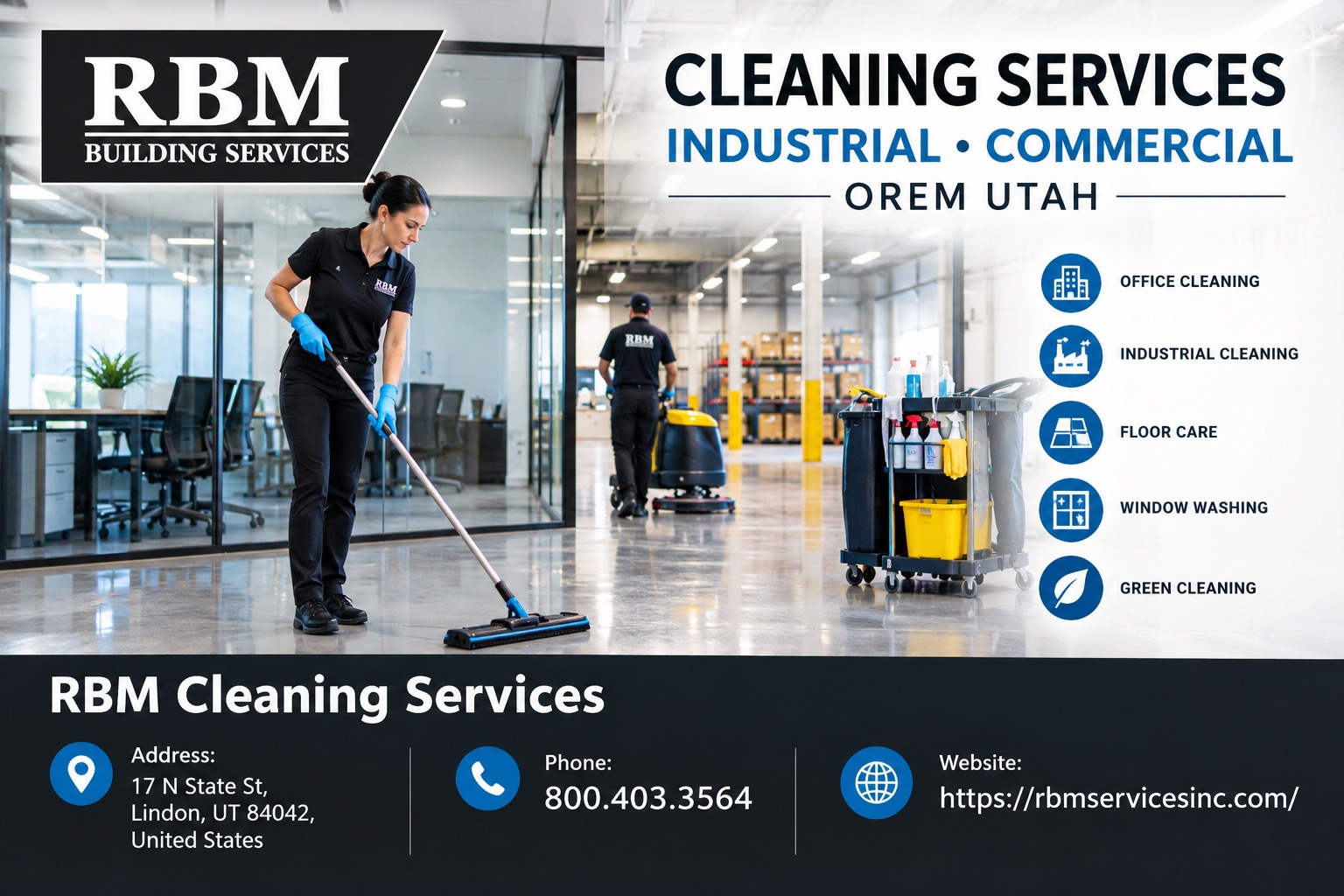
Cleaning Services Industrial Commercial Orem Utah: Professional Cleaning Solutions for Businesses and Industrial Facilities
Introduction
Maintaining a clean, safe, and professional work environment is essential for businesses of every size. From industrial facilities and manufacturing spaces to commercial offices, retail stores, warehouses, and professional buildings, cleanliness plays an important role in employee well-being, customer satisfaction, workplace organization, and the overall image of a company. For organizations looking for Cleaning Services Industrial Commercial Orem Utah, choosing a dependable commercial cleaning provider can make a meaningful difference in daily operations.
Orem, Utah, is an important business community in Utah County, with a diverse mix of offices, retail establishments, educational facilities, warehouses, healthcare-related workplaces, and other commercial operations. Each type of facility has different cleaning requirements. An office may need consistent dusting, restroom sanitation, and floor care, while an industrial facility may require more specialized attention to high-traffic floors, employee breakrooms, production-adjacent areas, and accumulated dust.
Professional industrial and commercial cleaning services help businesses maintain their facilities without placing the entire burden of cleaning on their employees. A well-planned cleaning program can support a healthier workplace, preserve building materials, improve the appearance of business premises, and allow staff members to focus on their primary responsibilities.
RBM Cleaning Services, associated with the website rbmservicesinc.com, provides a point of contact for businesses seeking commercial cleaning solutions in Utah. Organizations considering a cleaning partner should evaluate service offerings, experience with their facility type, scheduling flexibility, quality-control procedures, and ability to meet their specific requirements.
Whether you manage a busy office, operate a warehouse, oversee an industrial building, or own a commercial property, understanding the benefits of professional cleaning can help you make a well-informed decision.
Understanding Industrial and Commercial Cleaning Services
Industrial and commercial cleaning are related services, but they often involve different environments, equipment, procedures, and cleaning priorities.
What Are Commercial Cleaning Services?
Commercial cleaning focuses on maintaining workplaces and public-facing business environments. These spaces may include offices, retail stores, corporate buildings, shared facilities, and other locations where employees, customers, visitors, or tenants regularly spend time.
Common commercial cleaning tasks include:
-
Cleaning and sanitizing appropriate high-touch surfaces.
-
Dusting desks, furniture, fixtures, and accessible surfaces.
-
Vacuuming carpets and cleaning hard floors.
-
Cleaning restrooms and replenishing agreed-upon supplies.
-
Maintaining kitchens, lunchrooms, and employee break areas.
-
Removing trash and recycling according to facility procedures.
-
Cleaning entrances, reception areas, corridors, and shared spaces.
-
Maintaining a consistent and professional appearance throughout the building.
The exact scope depends on the type of business, the amount of daily foot traffic, the facility layout, and the cleaning schedule.
What Are Industrial Cleaning Services?
Industrial cleaning addresses the needs of facilities such as warehouses, manufacturing buildings, distribution centers, workshops, and other operational environments.
Depending on the facility and the provider’s capabilities, industrial cleaning may involve:
-
Removing ordinary dust and debris from approved work areas.
-
Cleaning warehouse and industrial floor surfaces.
-
Maintaining employee breakrooms, offices, and restrooms.
-
Cleaning designated storage and circulation areas.
-
Addressing dirt accumulation around approved non-operational surfaces.
-
Supporting scheduled deep cleaning and facility maintenance.
-
Following site-specific access, safety, and contamination-control procedures.
Industrial facilities can present challenges that do not arise in a typical office. Large floor areas, heavy equipment, specialized flooring, restricted-access zones, and unique workplace hazards all influence how cleaning should be performed.
Not every commercial cleaning company provides every type of industrial service. Businesses should confirm that a prospective provider has the appropriate training, equipment, procedures, and experience for their particular facility.
If you need related articles, see the following:
Cleaning Services Industrial Commercial West Jordan Utah
Cleaning Services Industrial Commercial West Valley City Utah
Cleaning Services Industrial Commercial Salt Lake City Utah
Why Orem, Utah Businesses Need Professional Cleaning
Orem businesses operate in a competitive environment where workplace presentation, operational efficiency, and employee experience matter. A consistently clean facility can help establish professional standards and create a more welcoming atmosphere for everyone who enters the building.
1. Creating a Healthier Workplace
Commercial facilities experience regular contact with shared surfaces, including door handles, counters, conference tables, restroom fixtures, and breakroom equipment. Without routine cleaning, dirt and contaminants can accumulate in these areas.
Professional cleaning helps remove soil and clean appropriate surfaces according to their intended use. When combined with good ventilation, handwashing practices, and suitable workplace hygiene procedures, consistent cleaning can support a healthier indoor environment.
Cleaning is not a substitute for specialized infection-control procedures where those are required. Businesses with particular sanitation needs should discuss appropriate products, methods, and documented procedures with their cleaning provider.
2. Improving Employee Productivity and Comfort
Employees are more likely to find a workplace comfortable when common areas are orderly, floors are maintained, waste is removed regularly, and restrooms are clean.
A disorganized or dirty environment can create distractions and make everyday tasks less pleasant. Professional cleaning helps businesses maintain a setting in which employees can concentrate on their work rather than worrying about neglected shared spaces.
Outsourcing cleaning responsibilities can also reduce the amount of time employees spend on tasks outside their normal job duties.
3. Presenting a Professional Business Image
Customers, clients, suppliers, and prospective business partners often form impressions as soon as they enter a facility.
Clean entrances, tidy reception areas, well-maintained floors, and fresh-looking restrooms demonstrate attention to detail. In retail and customer-facing businesses, these details can influence the overall visitor experience.
For offices and industrial companies that receive clients or conduct site tours, a clean facility can reinforce a commitment to professionalism and organized operations.
4. Protecting Floors, Fixtures, and Building Materials
Dirt, grit, and spills can gradually affect floors, furniture, fixtures, and other surfaces. Regular cleaning helps prevent unnecessary buildup and allows maintenance issues to be identified earlier.
Different materials require different methods. Carpet, tile, sealed concrete, vinyl, and other surfaces should be cleaned using compatible products and equipment.
A suitable maintenance schedule can help businesses protect their existing investments and reduce avoidable wear.
5. Supporting Efficient Facility Management
When cleaning is planned around a facility’s actual needs, managers can coordinate service schedules, establish priorities, and monitor results.
A consistent cleaning program can make it easier to prepare for inspections, maintain shared areas, manage tenant expectations, and keep the building ready for daily operations.
For businesses with large facilities, scheduled cleaning can also help prevent routine maintenance tasks from becoming more difficult because of accumulated dirt or neglected spaces.
Industrial and Commercial Cleaning Solutions for Orem Businesses
Businesses searching for cleaning services industrial commercial Orem Utah should look for a cleaning program that matches their building’s specific requirements. A tailored approach helps ensure that high-priority areas receive the right level of attention while keeping the overall service practical and cost-effective.
Office and Corporate Building Cleaning
Office environments require regular cleaning to maintain a professional appearance and comfortable working conditions. Dust, fingerprints, food debris, and everyday foot traffic can quickly affect the appearance of shared spaces.
Professional office cleaning may include:
-
Cleaning reception desks and visitor waiting areas.
-
Dusting accessible furniture and fixtures.
-
Vacuuming carpets and maintaining hard floors.
-
Cleaning conference rooms and shared workstations.
-
Sanitizing frequently touched surfaces using appropriate products.
-
Emptying trash containers and managing recycling.
-
Maintaining breakrooms, kitchens, and restrooms.
Cleaning can be scheduled before employees arrive, after business hours, or at other agreed-upon times to minimize disruption.
Warehouse and Distribution Facility Cleaning
Warehouses and distribution centers often contain extensive floor areas, storage aisles, loading zones, administrative offices, and employee facilities. Dust and debris can accumulate quickly, particularly in areas with frequent movement of goods.
A suitable cleaning program may include sweeping or scrubbing approved floor areas, removing ordinary debris, maintaining restrooms, cleaning breakrooms, and keeping administrative spaces orderly.
Cleaning teams should coordinate with facility managers to avoid interfering with forklifts, loading operations, stored materials, or restricted work zones. Specialized work around machinery or hazardous materials should only be performed by appropriately qualified personnel under suitable safety procedures.
Manufacturing and Industrial Facility Cleaning
Manufacturing environments can require additional planning because cleaning needs vary according to the production process, equipment, materials, and workplace hazards.
Routine cleaning may address approved floors, offices, staff rooms, restrooms, and designated common areas. Some facilities may also need specialized services for particular residues or operational environments.
Before beginning work, the facility manager and cleaning provider should establish:
-
Which areas are included in the cleaning contract.
-
Which surfaces and materials require specialized treatment.
-
Whether cleaning must occur during production shutdowns.
-
What personal protective equipment is required.
-
How chemicals and cleaning equipment will be stored.
-
Which areas are restricted to authorized personnel.
-
What documentation and safety procedures apply.
Industrial cleaning should never interfere with machine safeguards or introduce unnecessary risks to employees. Chemical spills, hazardous residues, and specialized industrial contamination may require a qualified environmental or industrial cleaning contractor rather than a general janitorial crew.
Retail Store and Showroom Cleaning
Retail spaces depend heavily on appearance and customer experience. Dirty floors, overflowing trash containers, dusty displays, and neglected restrooms can undermine an otherwise attractive store.
Commercial cleaning services can help retailers maintain entrances, sales floors, display areas, checkout counters, staff rooms, and customer restrooms. Cleaning schedules should reflect business hours, seasonal traffic, and the types of surfaces present.
For showrooms and businesses displaying expensive merchandise, cleaning methods should also protect sensitive products and finishes.
Educational and Institutional Facility Cleaning
Schools, training centers, and other institutional environments often contain classrooms, corridors, offices, restrooms, cafeterias, and shared activity spaces.
Cleaning plans should account for the volume of daily use, age of occupants, facility policies, and the particular hygiene requirements of each area. High-touch surfaces and restrooms may need more frequent attention than less-used spaces.
Facilities with specialized sanitation or regulatory requirements should establish documented cleaning procedures appropriate to their operations.
Essential Components of a Commercial Cleaning Program
An effective cleaning contract should clearly define the work to be completed, the frequency of each task, and the standards expected.
Routine Janitorial Services
Routine janitorial services provide the foundation of most commercial cleaning programs. Depending on the contract, they can include trash removal, floor maintenance, restroom cleaning, surface dusting, and upkeep of common areas.
Daily service may be appropriate for high-traffic facilities, while smaller or less frequently used buildings may require cleaning several times a week.
The ideal schedule should be determined by actual usage rather than simply selecting the most frequent or least expensive option.
Professional Floor Care
Floors often represent one of the largest visible surfaces in a commercial facility. Their condition can influence both appearance and safety.
Different flooring materials require different care strategies:
-
Carpet: Regular vacuuming and periodic extraction when appropriate.
-
Tile and grout: Routine cleaning and targeted attention to embedded soil.
-
Vinyl flooring: Compatible cleaning products and maintenance procedures.
-
Sealed concrete: Dust and debris removal, with scrubbing where appropriate.
-
Specialty flooring: Manufacturer-approved methods and suitable equipment.
Some floors may benefit from periodic stripping, refinishing, or recoating. These services should be scheduled according to the flooring type and manufacturer’s recommendations.
Restroom Cleaning and Sanitation
Restrooms require consistent attention because they are used repeatedly throughout the day and can quickly develop unpleasant odors or visible soil.
A comprehensive restroom cleaning routine may include cleaning and disinfecting suitable fixtures, wiping counters and sinks, cleaning mirrors, maintaining floors, emptying waste bins, and checking supply levels.
Disinfectants should be used according to label instructions, including the required contact time. Cleaning products should never be mixed unless their instructions explicitly permit it.
Carpet and Upholstery Maintenance
Commercial carpets can trap dust, grit, and other debris. Regular vacuuming helps control accumulation, while periodic professional cleaning can address deeper soil and certain stains.
The appropriate cleaning method depends on the carpet construction, backing, fiber type, and manufacturer guidance. Businesses should allow adequate drying time and follow recommendations for returning cleaned areas to service.
Window and Glass Cleaning
Clean windows and glass partitions can improve a building’s appearance and help maintain a bright, professional interior.
Commercial window washing may include accessible interior glass, partitions, entrance doors, and approved exterior windows. High-rise work and difficult-to-access glass require appropriate equipment, training, and fall-protection procedures.
Green Cleaning Options
Some businesses prefer cleaning programs that emphasize environmentally preferable products and practices.
Green cleaning can involve selecting suitable lower-impact products, reducing unnecessary chemical use, improving waste management, and using efficient equipment. Product selection must still account for cleaning effectiveness, surface compatibility, and the sanitation requirements of the facility.
RBM Building Services lists green cleaning among its commercial service offerings. Businesses interested in this approach can discuss available options and determine which products and procedures fit their building’s needs.
How Professional Cleaning Can Support Workplace Safety
Cleanliness is an important part of facility management, but safety also depends on how cleaning work is organized and performed.
Reducing Slip and Trip Hazards
Dust, loose debris, spills, and poorly maintained floors can create hazards. Cleaning teams should use appropriate methods to remove these materials and clearly communicate when floors are wet or temporarily inaccessible.
Facilities should also establish procedures for reporting spills and addressing unexpected hazards promptly.
Supporting Better Organization
Regular cleaning can help keep approved walkways, entrances, and shared areas free of unnecessary debris. In warehouses and industrial buildings, clear pathways are particularly important for pedestrian movement and equipment operations.
Cleaning staff should follow the facility’s traffic-management procedures and never move materials or equipment without authorization.
Using Chemicals Responsibly
Commercial cleaning products must be selected, stored, and handled appropriately. Workers should follow product labels, safety data sheets, and site-specific requirements.
Facility managers should ask cleaning providers about chemical handling, staff training, equipment storage, and procedures for addressing accidental exposure.
Maintaining Appropriate Documentation
Some facilities need documented cleaning schedules, inspection records, or specific sanitation procedures. This can be especially relevant in regulated environments.
Businesses should identify any applicable requirements before work begins and confirm that the proposed cleaning provider can meet them. Routine janitorial service alone does not establish regulatory compliance.
Customized Cleaning Schedules for Orem Commercial Properties
Not every building needs the same cleaning frequency. A customized plan can help businesses allocate their budgets to the areas that require the most attention.
| Cleaning frequency | Common applications |
|---|---|
| Daily | Busy offices, high-traffic restrooms, retail areas, and shared facilities |
| Several times per week | Medium-traffic offices and commercial buildings |
| Weekly | Lower-traffic spaces or selected maintenance tasks |
| Monthly or periodically | Deep cleaning, detailed floor care, and specific maintenance projects |
| Seasonal or as needed | Selected exterior cleaning, event cleanup, and scheduled specialty work |
These are general examples rather than fixed recommendations. A facility may require a combination of daily, weekly, and periodic services.
When developing a schedule, consider the building’s square footage, number of occupants, operating hours, floor types, restroom usage, and budget. Businesses should also identify tasks that need to occur outside normal operating hours.
How to Choose an Industrial and Commercial Cleaning Company
Selecting a cleaning provider involves more than comparing prices. The right company should understand your facility, communicate clearly, and provide a service plan that can be evaluated over time.
Verify Relevant Experience
Ask whether the provider has experience with facilities similar to yours. Cleaning an office differs from maintaining a warehouse or working in a manufacturing environment.
If your property has specialized requirements, request details about the provider’s training, equipment, and experience handling comparable work.
Review the Proposed Scope of Work
A written scope should identify which areas are cleaned, how often tasks occur, which supplies are included, and what falls outside the contract.
Clear documentation helps avoid misunderstandings and makes it easier to evaluate whether the service meets expectations.
Ask About Staff Training and Security
Cleaning teams may work around confidential documents, expensive equipment, restricted areas, and sensitive business information.
Ask about employee screening where applicable, site-access procedures, key management, safety training, and confidentiality expectations.
Compare Pricing Transparently
Commercial cleaning prices depend on multiple factors, including square footage, cleaning frequency, floor types, service complexity, staffing requirements, and specialized equipment.
Request a detailed proposal rather than relying solely on a headline price. Confirm whether consumables, specialty services, supplies, and periodic deep cleaning are included.
Establish Quality-Control Procedures
A dependable cleaning program should include a practical way to communicate concerns and review results.
Businesses may benefit from checklists, scheduled inspections, service reports, and a designated point of contact. Agreeing on these procedures at the start helps both parties understand what satisfactory service looks like.
Why Orem Businesses Should Call RBM Building Services
When searching for Cleaning Services Industrial Commercial Orem Utah, businesses need a provider that can understand their operational requirements and deliver a suitable cleaning program.
RBM Building Services, also referred to in your contact information as RBM Cleaning Services, offers commercial janitorial and building maintenance services in Utah. Its official website describes full-service janitorial cleaning, floor recoating, window washing, green cleaning, pressure washing, and related facility services. The company also lists Orem among the communities served in Utah County.
Here are several reasons to contact RBM about your facility.
A Broad Range of Building Services
Managing multiple vendors for cleaning and property maintenance can create additional administrative work. RBM’s service portfolio includes several cleaning and building-related offerings, which may allow businesses to coordinate selected services through one provider.
Depending on your needs, you can ask about routine janitorial services, floor care, window cleaning, and other available building maintenance options.
Experience Serving Commercial Properties
RBM’s website states that the company has decades of experience in building services and describes its work across different types of commercial properties.
For businesses, relevant experience can help inform cleaning schedules, building access arrangements, and maintenance priorities. You should still confirm the team’s experience with your specific industrial environment and any specialized cleaning requirements.
Cleaning Plans Tailored to Your Facility
A small professional office and a large distribution center have very different cleaning needs. A suitable service plan should account for the building’s size, operating hours, traffic levels, and areas requiring additional attention.
When contacting RBM, explain your facility type and identify the most important cleaning challenges. Ask for a proposal that sets out the recommended tasks, service frequency, and expected costs.
Support for Ongoing Facility Maintenance
Cleanliness is an ongoing responsibility. Floors, restrooms, entrances, breakrooms, and shared spaces need regular attention to remain presentable.
RBM’s combination of janitorial and related property services may be useful to businesses looking to coordinate recurring cleaning with selected maintenance tasks. Confirm which services are available for your location and whether they can be combined under a suitable agreement.
A Practical Starting Point for Your Cleaning Needs
If you are unhappy with your current cleaning arrangements, experiencing inconsistent results, or preparing to open a new commercial space, requesting a consultation can help clarify your options.
Before choosing a provider, discuss:
-
The size and type of your building.
-
Your preferred cleaning schedule.
-
Any industrial or safety-specific requirements.
-
Your expectations for floor care and sanitation.
-
Your budget and contract preferences.
-
How cleaning quality will be inspected.
-
How to report issues and request additional work.
Calling RBM Building Services gives you an opportunity to explain these needs and ask whether its available services are a suitable match.
9. The Long-Term Value of Professional Industrial and Commercial Cleaning
Professional cleaning should be evaluated as part of an overall facility maintenance strategy, not simply as an expense.
A consistent cleaning program can help maintain the building’s appearance, support workplace organization, reduce the accumulation of dirt, and preserve suitable surfaces through routine care.
It can also free employees from cleaning responsibilities that fall outside their main roles. For facility managers overseeing multiple areas or buildings, an established service schedule can make routine maintenance easier to coordinate.
Results depend on the quality of the service plan, the methods used, the condition of the building, and how consistently the agreed work is completed. Businesses should periodically review their cleaning programs and make adjustments as occupancy, operations, or facility requirements change.
10. Tips for Maintaining a Cleaner Facility Between Professional Visits
Professional cleaning works best when supported by reasonable daily practices.
Businesses can encourage employees to:
-
Dispose of waste in designated containers.
-
Clean up ordinary spills promptly using approved procedures.
-
Keep walkways and exits clear.
-
Store supplies and equipment in designated areas.
-
Report maintenance issues, leaks, and unusual contamination.
-
Keep shared kitchens and breakrooms orderly.
-
Follow handwashing and workplace hygiene procedures.
-
Notify facility managers when cleaning needs change.
Industrial environments may require additional procedures, particularly around production areas, chemicals, machinery, and regulated materials. Employees should follow the facility’s established safety policies rather than attempting unfamiliar cleaning tasks themselves.
Combining employee awareness with a professional cleaning schedule can help maintain a cleaner and more organized workplace.
Conclusion: Professional Cleaning Services Industrial Commercial Orem Utah
Clean, well-maintained facilities help businesses create a professional impression, support employees, protect building materials, and manage everyday operations more effectively. From office janitorial services and restroom sanitation to commercial floor care, warehouse cleaning, and selected industrial maintenance tasks, a carefully planned cleaning program can make a meaningful difference.
The best approach starts with understanding your facility’s specific requirements. Consider your building’s size, daily activity, flooring, sanitation priorities, operating schedule, and any industry-specific safety obligations before selecting a provider.
For businesses seeking Cleaning Services Industrial Commercial Orem Utah, RBM Building Services is worth contacting to discuss available services and determine whether the company can meet your needs. Its published offerings include commercial janitorial services, floor care, window washing, green cleaning, and related building maintenance, and its website lists Orem within its Utah County service area.
Contact RBM Cleaning Services to discuss your property, request a service proposal, and explore a cleaning schedule that supports your business.
Contact RBM Cleaning Services
RBM Cleaning Services
Address: 17 N State St, Lindon, UT 84042, United States
Phone: 800.403.3564
Website: https://rbmservicesinc.com/
Visit RBM Building Services

Comments are closed.