

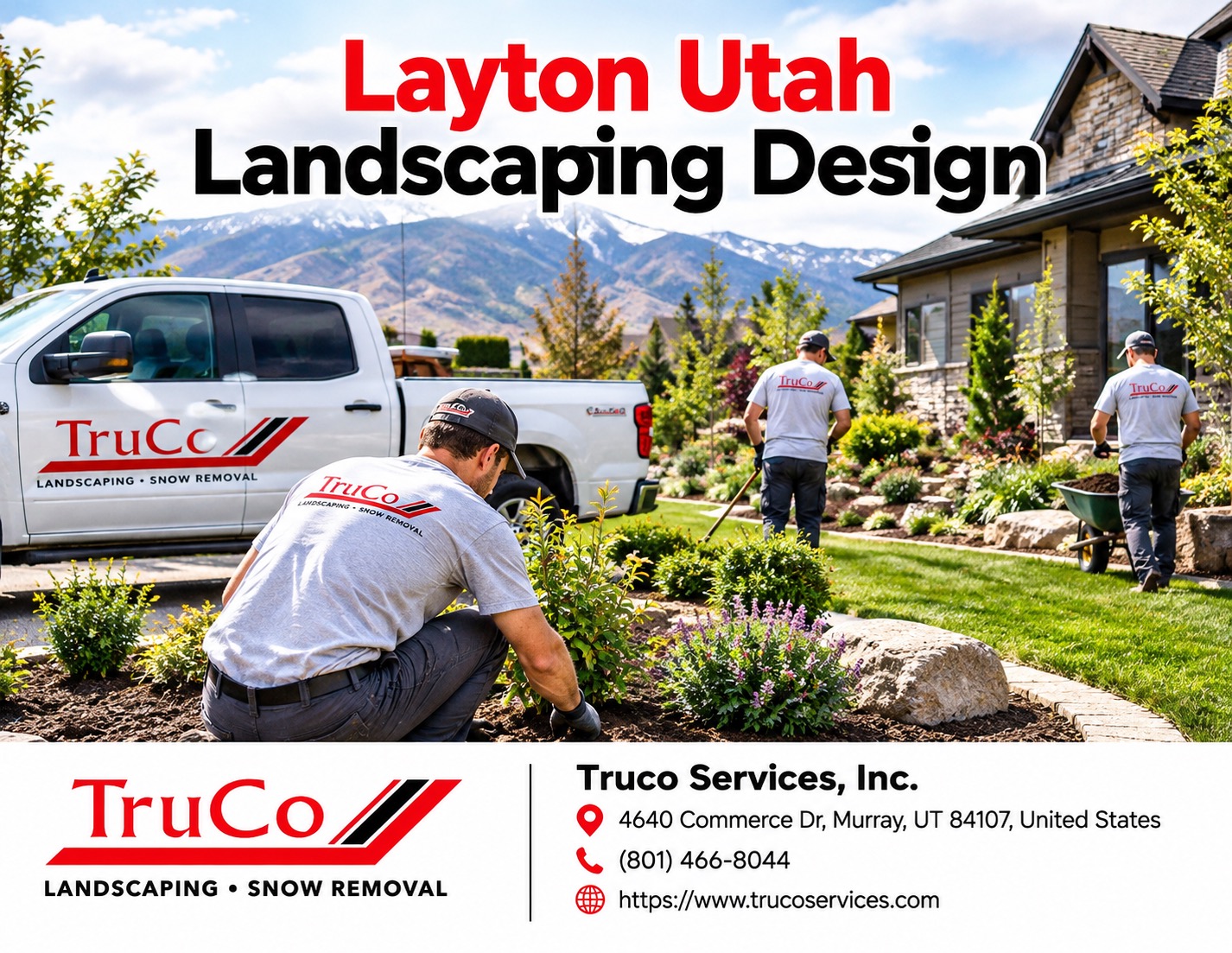
Layton Utah Landscaping Design: Transform Your Outdoor Space with Truco Services, Inc.
Introduction to Layton Utah Landscaping Design
A beautiful landscape can transform an ordinary property into a welcoming, functional, and visually appealing outdoor environment. For homeowners and businesses in Layton, Utah, professional landscaping design offers an opportunity to enhance curb appeal, create comfortable outdoor living spaces, improve the usability of a yard, and complement the natural beauty of Northern Utah. Whether you want a modern backyard retreat, a colorful garden, a low-maintenance front yard, or a complete landscape renovation, thoughtful planning is the foundation of a successful project.
Layton Utah landscaping design involves more than choosing plants and arranging decorative features. It requires a careful understanding of the property’s layout, soil conditions, sunlight exposure, drainage, irrigation needs, seasonal weather, and the owner’s long-term goals. A well-designed landscape brings these elements together to create an outdoor space that looks attractive and functions efficiently throughout the year.
Truco Services, Inc. provides landscaping and outdoor property improvement services for customers seeking to enhance their outdoor environments. With professional planning and attention to detail, property owners can develop landscapes that reflect their personal style while accounting for Utah’s distinctive climate.
If you are planning to improve your outdoor space, investing in professional landscaping design can help you make informed decisions, avoid common mistakes, and create a property you can enjoy for years.
Why Landscaping Design Matters in Layton, Utah
Layton is located in Davis County, near the Wasatch Mountains and the Great Salt Lake. Its surroundings provide a beautiful setting for residential and commercial landscapes, but the local environment also presents specific challenges.
Northern Utah experiences cold winters, warm summers, seasonal temperature changes, and periods of limited rainfall. These conditions influence plant selection, irrigation planning, hardscape materials, and landscape maintenance requirements.
A carefully designed landscape takes these factors into account before installation begins.
Improving Curb Appeal
The front yard is often the first feature visitors, neighbors, customers, and prospective buyers notice. An organized landscape with healthy plants, attractive pathways, well-defined garden beds, and balanced proportions can make a property look more inviting.
Professional landscaping design can coordinate the home’s architecture with the surrounding outdoor environment. For example, a contemporary home may benefit from clean lines, ornamental grasses, structured planting beds, and simple stone features. A traditional home might look better with layered shrubs, flowering perennials, curved garden beds, and a welcoming walkway.
The objective is to create a cohesive appearance rather than a collection of unrelated landscaping features.
Creating Functional Outdoor Living Areas
A well-designed yard can serve many purposes beyond decoration. Homeowners may want a place for entertaining, dining outdoors, relaxing after work, gardening, or spending time with family.
Landscaping design can organize a property into distinct functional areas, such as:
- Patios for outdoor dining and social gatherings.
- Lawn areas for recreation and everyday activities.
- Garden spaces for flowers, vegetables, or ornamental plants.
- Shaded seating areas for warm summer afternoons.
- Walkways connecting entrances, patios, and garden areas.
- Outdoor lighting that improves visibility and ambiance.
By planning these features together, property owners can make better use of the available space.
Supporting Property Value
A well-maintained, thoughtfully designed landscape can contribute to a property’s overall presentation and perceived value. Attractive landscaping helps create a positive impression and may make a home or commercial property more appealing to prospective buyers or tenants.
However, results depend on the property’s location, market conditions, design quality, installation costs, and ongoing maintenance. Landscaping should be planned around both immediate enjoyment and realistic long-term goals.
If you need related articles, see the following:
Layton Utah Landscaping Services
Essential Elements of Professional Layton Utah Landscaping Design
Successful landscaping projects combine several important design components. Each element should complement the others to create a balanced and practical outdoor environment.
1. Landscape Planning and Site Assessment
Every successful project begins with understanding the property. Before choosing plants or installing hardscape features, it is important to evaluate the yard’s dimensions, existing vegetation, slope, soil, sunlight, drainage, and access points.
A site assessment can help identify areas that receive full sun, locations that remain shaded, sections where water collects, and places where soil may require improvement.
Property owners should also consider how they use their outdoor space. A household with children may prioritize open lawn areas, while someone who enjoys entertaining may prefer a spacious patio and comfortable seating areas.
Professional planning helps align the landscape with the property’s physical characteristics and the owner’s priorities.
2. Plant Selection for Northern Utah’s Climate
Plant selection is one of the most important aspects of landscaping design in Layton. Plants must be suited to local winter temperatures, summer heat, sunlight conditions, soil characteristics, and available water.
Depending on the site, appropriate options may include drought-tolerant ornamental grasses, hardy flowering perennials, deciduous shrubs, evergreen plants, and trees suited to Northern Utah.
Native and regionally adapted plants can be particularly valuable because they are often better suited to local environmental conditions. Once established, some drought-tolerant plants may also require less supplemental irrigation than traditional high-water-use alternatives.
However, no plant is automatically suitable for every yard. Mature size, root behavior, shade requirements, maintenance needs, and resistance to local pests should all be considered.
A good planting plan includes different heights, textures, colors, and seasonal characteristics. Trees can provide structure and shade, shrubs can define boundaries, and flowers can introduce seasonal color.
3. Lawn Design and Grass Installation
Lawns remain a popular feature of many residential landscapes because they provide open space for recreation and a clean visual contrast with planting beds.
The right lawn design depends on how the space will be used. Families may need durable grass areas, while homeowners seeking lower maintenance may prefer a smaller lawn surrounded by ornamental plants and decorative stone.
Before installing grass or sod, the soil should be appropriately prepared, grading should support proper drainage, and irrigation should be designed to distribute water effectively.
In Layton’s climate, choosing a suitable turf variety and managing irrigation responsibly are essential. Overwatering can waste water and contribute to drainage problems, while underwatering can stress the lawn during hot weather.
A landscape professional can help determine whether a full lawn, a reduced lawn, or a combination of turf and water-wise planting is appropriate for the property.
4. Garden Beds and Colorful Planting Arrangements
Garden beds introduce texture, color, and visual interest. They can soften the appearance of walls, frame entrances, define outdoor areas, and create focal points around trees or architectural features.
Successful garden design considers more than flower color. Plant height, mature width, bloom season, foliage texture, and maintenance requirements all influence the final appearance.
Layering is an effective approach. Taller plants can provide background structure, medium-height shrubs can create visual transitions, and shorter flowers or groundcovers can fill the foreground.
Mulch can help conserve soil moisture, moderate soil temperatures, and reduce weed growth when applied appropriately. The correct mulch type and depth depend on the planting area and plant species.
5. Hardscape Design
Hardscaping includes the nonliving features of a landscape, such as patios, walkways, retaining walls, steps, decorative stone, and outdoor seating areas.
These features provide structure and make outdoor spaces easier to navigate. They can also reduce the amount of lawn requiring regular mowing when designed as part of a broader water-wise landscape.
Popular hardscape options include:
- Concrete patios for practical outdoor use.
- Paver patios for decorative patterns and defined spaces.
- Natural stone for an organic appearance.
- Retaining walls for suitable sloped areas.
- Gravel pathways for informal garden routes.
- Decorative edging to separate planting beds from lawns.
Material selection should account for durability, appearance, drainage, maintenance, and the home’s architectural style.
Proper base preparation and grading are particularly important. Poor installation can lead to uneven surfaces, shifting pavers, and water-management problems.
6. Irrigation and Water Conservation
Water management is a central consideration in Utah landscaping. A beautiful design should not depend on inefficient watering practices.
Irrigation planning begins with grouping plants according to their water requirements. This approach, sometimes called hydrozoning, helps prevent drought-tolerant plants from receiving excessive water simply because they share an irrigation zone with thirsty plants.
Drip irrigation can deliver water near plant roots and may reduce evaporation in suitable planting beds. Efficient sprinklers can support lawns when properly selected, positioned, and maintained.
Other useful water-saving practices include:
- Selecting plants adapted to local conditions.
- Reducing unnecessary lawn areas.
- Applying mulch to suitable planting beds.
- Adjusting irrigation schedules seasonally.
- Checking regularly for leaks and broken sprinkler heads.
- Using soil conditions and plant needs to guide watering.
Water conservation should be considered during the initial design stage rather than treated as an afterthought.
7. Drainage and Grading
Drainage is an essential but sometimes overlooked component of landscaping design. Poor grading can allow water to collect near foundations, create muddy areas, damage planting beds, or contribute to erosion.
A well-planned landscape directs runoff toward appropriate drainage areas without creating problems for neighboring properties or public spaces.
Potential solutions include carefully designed grading, suitable drainage channels, permeable surfaces, and planting strategies that help manage runoff. More complex drainage issues may require a qualified drainage specialist.
Retaining walls and major grading changes also need appropriate planning, and some projects may require permits or engineering review.
Addressing drainage before installing decorative features can help protect the landscape and reduce the likelihood of expensive future repairs.
Popular Landscaping Design Styles for Layton Homes
Every property has different requirements, and the best design depends on the owner’s preferences, the building’s architecture, and the site’s environmental conditions.
Modern Landscaping Design
Modern landscapes emphasize simplicity, clean lines, geometric forms, and carefully selected materials. They may feature structured planting beds, ornamental grasses, contemporary pavers, subtle lighting, and restrained color palettes.
This style works well for property owners who prefer an organized appearance and clearly defined outdoor spaces.
Traditional Landscaping Design
Traditional landscaping often incorporates layered garden beds, flowering shrubs, shade trees, curved pathways, and welcoming lawn areas.
It can create a comfortable, established appearance that complements a wide range of homes.
Water-Wise Landscaping
Water-wise landscaping emphasizes responsible irrigation, appropriate plant selection, and efficient use of outdoor space.
Depending on the design, it may incorporate drought-tolerant plants, decorative rock, mulch, limited turf, and drip irrigation.
A water-wise landscape does not have to look barren or repetitive. Combining varied plant forms, seasonal flowers, contrasting foliage, and thoughtfully arranged stone can produce a colorful and attractive result.
Natural and Mountain-Inspired Landscaping
Layton’s proximity to the Wasatch Mountains makes naturalistic landscaping an appealing option for some properties.
This approach may use locally appropriate plants, natural stone, flowing planting arrangements, and textures inspired by the surrounding landscape.
The key is to choose plants and materials that suit the actual site rather than simply copying a mountain landscape into a residential yard.
Family-Friendly Landscaping
Families may benefit from a design that combines open recreation areas with attractive planting beds and comfortable gathering spaces.
Durable lawn areas, clear pathways, shaded seating, and appropriately positioned outdoor features can help make the yard more functional.
Plant toxicity, thorny vegetation, visibility, and safe circulation should be considered when designing spaces used by children and pets.
Commercial Landscaping Design in Layton
Landscaping is equally important for commercial properties. Offices, retail locations, apartment communities, and other businesses can benefit from attractive outdoor environments that create a positive first impression.
Commercial landscaping design may include entrance plantings, defined pedestrian routes, parking-lot landscaping, shade trees, low-maintenance planting beds, and outdoor seating.
The design should reflect the property’s purpose while accounting for visibility, accessibility, pedestrian safety, irrigation, and maintenance schedules.
Businesses often benefit from practical layouts that preserve access to entrances and signage while keeping the property neat and welcoming.
For commercial owners and property managers, the best landscape is one that balances appearance with durability and manageable long-term costs.
The Landscaping Design and Installation Process
Understanding the process can help property owners prepare for a project and communicate their expectations clearly.
Step 1: Establish Your Goals
Begin by identifying what you want to accomplish. You may want to improve curb appeal, create an outdoor dining area, replace an aging lawn, add privacy, improve drainage, or redesign the entire yard.
A clear list of priorities helps guide decisions and keeps the project focused.
Step 2: Evaluate the Property
Review the site’s existing conditions, including sunlight, soil, slopes, drainage, access, and established vegetation.
It is also useful to identify features that should remain, such as mature trees or existing patios that are still in good condition.
Step 3: Develop a Design Concept
The design concept organizes the landscape into functional areas and establishes the overall visual style.
Planting plans, hardscape layouts, material selections, and irrigation considerations should work together rather than being planned independently.
Step 4: Set a Realistic Budget
Landscaping costs vary according to property size, design complexity, plant selection, material prices, grading, irrigation, and labor.
A phased approach may be appropriate when a complete transformation exceeds the available budget. For example, a property owner might address drainage and grading first, install primary hardscaping next, and complete additional planting beds later.
Prioritize work that affects safety, drainage, and the long-term success of the landscape before adding optional decorative features.
Step 5: Prepare the Site
Site preparation may include removing unwanted vegetation, improving soil, adjusting grades, establishing drainage, and preparing bases for patios or pathways.
Proper preparation is critical because the finished landscape depends on the quality of the work beneath the surface.
Step 6: Install Plants and Landscape Features
Installation brings the design to life. Trees, shrubs, flowers, lawn areas, irrigation systems, walkways, and other features should be installed in an appropriate sequence.
Careful coordination can help prevent damage to completed work and ensure that the different landscape components function together.
Step 7: Maintain the Finished Landscape
Even a professionally designed landscape needs appropriate care. Watering, pruning, weed management, seasonal cleanup, and irrigation adjustments help preserve the appearance and health of the property.
A maintenance plan should reflect the plant species, irrigation system, soil conditions, and seasonal weather.
Seasonal Landscaping Considerations in Layton, Utah
Utah’s changing seasons influence landscape planning and maintenance.
Spring: Spring is a useful time to assess winter damage, inspect irrigation systems, prepare planting beds, and plan new installations when soil conditions permit.
Summer: Warm weather increases the importance of efficient watering, weed management, mowing, and monitoring plants for heat stress. Newly installed plants may need more attentive watering while their roots establish.
Fall: Fall can be an appropriate time for planting many trees and shrubs, depending on the species and local conditions. It is also a good time to remove accumulated debris, inspect drainage, and prepare irrigation systems for colder weather.
Winter: Winter maintenance may involve protecting vulnerable plants, avoiding unnecessary traffic on dormant lawns, and planning future improvements. Irrigation systems should be winterized as appropriate to help prevent freeze damage.
A landscape designed around seasonal conditions is more likely to remain attractive and manageable throughout the year.
Common Landscaping Design Mistakes to Avoid
Even well-intentioned projects can encounter problems when planning is rushed.
Choosing Plants Without Considering Mature Size
Small plants can grow significantly over time. Planting trees or shrubs too close to buildings, walkways, fences, or utilities can create maintenance problems and may lead to expensive removal or relocation.
Always consider mature dimensions and root characteristics.
Ignoring Water Requirements
Combining plants with very different watering needs in the same irrigation zone can lead to overwatering some plants and underwatering others.
Grouping plants by water requirements supports healthier growth and more efficient irrigation.
Overlooking Drainage
A landscape may look attractive immediately after installation but develop serious problems if runoff is not managed appropriately.
Grading and drainage should be addressed early in the planning process.
Using Too Many Competing Features
Too many colors, materials, ornaments, and unrelated design styles can make an outdoor space feel cluttered.
A cohesive plan uses a limited palette of complementary materials and repeats selected plants or textures to create visual consistency.
Underestimating Maintenance
A complicated garden with extensive seasonal flowers, large lawn areas, and numerous shrubs may require more upkeep than expected.
Consider how much time and money you want to spend on ongoing maintenance before finalizing the design.
Why You Should Call Truco Services, Inc. for Landscaping Design
Choosing a landscaping company is an important decision because the quality of planning and installation can affect your property’s appearance, usability, and long-term maintenance needs.
Truco Services, Inc. is an option for property owners seeking professional landscaping assistance. When planning a project in Layton, working with an experienced landscaping service can help you evaluate your goals, identify suitable improvements, and develop an outdoor space that fits your property’s needs.
Here are several reasons to consider contacting Truco Services.
A Focus on Your Property’s Needs
Every property is different. A small front yard requires a different approach from a large backyard, sloped lot, or commercial landscape.
Discussing your goals with Truco Services can help you explore design possibilities based on the space available, the appearance you want, and the features that matter most to you.
Attention to Landscape Functionality
A successful landscape should be attractive and practical. Walkways should connect important areas, patios should provide usable gathering space, and planting arrangements should suit the site’s sunlight and water conditions.
Planning these details together can help avoid a design that looks appealing on paper but is inconvenient in everyday use.
Support for Long-Term Landscape Planning
Landscaping is a long-term investment. Plants grow, materials age, and maintenance needs change over time.
A thoughtful approach considers the future size of trees and shrubs, irrigation requirements, material durability, and the amount of upkeep a property owner can reasonably manage.
When contacting Truco Services, ask about design recommendations that can help balance immediate visual improvements with long-term practicality.
Opportunities to Improve Curb Appeal
Whether your front yard needs a refresh or your entire property needs a new direction, professional landscaping can help create a more coordinated appearance.
Planting beds, lawn edges, pathways, trees, and other outdoor features can be arranged to complement the home’s architecture and improve the overall presentation.
Clear Project Communication
Before starting any landscaping project, it is important to understand the proposed scope, materials, schedule, pricing, and maintenance expectations.
Truco Services can be contacted to discuss your landscaping goals and determine which services are appropriate for your property. Ask for a clear estimate and confirm which design, installation, irrigation, hardscape, and maintenance tasks are included in the proposal.
This helps ensure that expectations are aligned before work begins.
One Point of Contact for Your Landscaping Needs
Property owners often prefer to discuss their outdoor improvement goals directly with a landscaping service rather than coordinate every decision independently.
Contacting Truco Services gives you an opportunity to explain your priorities, ask questions, and learn whether the company’s available services match your project requirements.
For the best results, share photographs of the property, identify any existing drainage or irrigation concerns, and describe how you want to use the finished space.
How Much Does Landscaping Design Cost in Layton, Utah?
The cost of landscaping design and installation varies considerably. A simple planting-bed refresh may require a relatively modest investment, while a complete yard transformation involving patios, retaining walls, new irrigation, grading, trees, and sod can cost substantially more.
Common factors affecting cost include:
- Property size and accessibility.
- Complexity of the landscape design.
- Number and type of plants.
- Soil preparation and grading requirements.
- Irrigation equipment and installation.
- Patio, walkway, and retaining-wall materials.
- Drainage improvements.
- Labor and site preparation.
- Ongoing maintenance requirements.
The best way to understand the cost of your project is to request an estimate based on your property and desired results.
It can also be helpful to compare proposals based on their actual scope, materials, installation details, warranties, and maintenance recommendations rather than price alone.
Frequently Asked Questions About Layton Utah Landscaping Design
What is included in landscaping design?
Landscaping design may include site assessment, layout planning, plant selection, garden-bed arrangements, lawn planning, hardscape concepts, irrigation considerations, drainage planning, and recommendations for landscape installation and maintenance. The exact scope depends on the provider and project.
What plants work well in Layton, Utah?
Suitable plants depend on winter hardiness, summer heat, sunlight, soil, water availability, and the amount of maintenance desired. Regionally adapted trees, shrubs, perennials, and ornamental grasses can be good candidates when selected for the specific site.
Is water-wise landscaping a good choice for Layton homes?
Water-wise landscaping can be a practical option because it emphasizes efficient irrigation and plants suited to local conditions. The design can still include colorful flowers, attractive shrubs, trees, and carefully selected lawn areas.
When is the best time to start a landscaping project?
Spring and fall can be suitable periods for many landscaping activities, although the ideal timing depends on the work involved, weather, soil conditions, and plant species. Planning can begin well before the preferred installation season.
Can landscaping design improve a small yard?
Yes. A thoughtful layout can make a small yard feel more organized and functional. Clearly defined seating areas, carefully selected plants, appropriately scaled hardscaping, and efficient pathways can help maximize available space.
Should drainage be addressed before landscaping installation?
Yes. Drainage problems should be evaluated before installing major landscape features. Correcting grading and water-management issues early can help protect planting areas, paved surfaces, and nearby structures.
Why should I contact Truco Services, Inc.?
Contacting Truco Services gives you an opportunity to discuss your landscaping goals, ask about relevant services, and determine whether the company is a suitable fit for your project. Request details about the proposed scope, schedule, pricing, and maintenance requirements before making a decision.
Contact Truco Services, Inc. for Landscaping Services
If you are ready to improve your property’s appearance and functionality, start by identifying your goals and discussing the possibilities with a landscaping professional.
From refreshing garden beds to planning a more comprehensive outdoor transformation, thoughtful landscaping design can help you create a space that complements your home, supports your lifestyle, and responds to Layton’s local climate.
Truco Services, Inc. can be contacted to discuss your landscaping needs and learn more about the services available for your property.
Truco Services, Inc.
Address: 4640 Commerce Dr, Murray, UT 84107, United States
Contact Number: (801) 466-8044
Website: https://www.trucoservices.com
Call (801) 466-8044 or visit the Truco Services website to discuss your landscaping project, ask about available services, and request an estimate.
Conclusion
Layton Utah landscaping design is an opportunity to create an outdoor environment that is beautiful, functional, and suited to the demands of Northern Utah’s climate. From plant selection and lawn planning to patios, irrigation, drainage, and seasonal maintenance, each decision contributes to the success of the finished landscape.
A well-designed yard can improve curb appeal, make outdoor spaces more enjoyable, support responsible water use, and simplify long-term property care. The key is to develop a plan that balances visual appeal with practical requirements and realistic maintenance expectations.
By identifying your priorities and discussing your project with Truco Services, Inc., you can take the next step toward an outdoor space that better reflects your needs and preferences.
If you are considering a landscape upgrade in Layton, Utah, contact Truco Services at (801) 466-8044 or visit https://www.trucoservices.com to start the conversation about your landscaping goals.

Comments are closed.